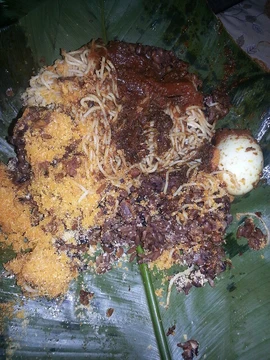
Shito
A ubiquitous Ghanaian hot black pepper sauce from the Ga tribe.
Shito, also known as shitor din (meaning 'black pepper' in the Ga language), is a hot black pepper sauce ubiquitous in Ghanaian cuisine. Its original recipe is attributed to the Ga tribe, and it is used as a condiment across many dishes in Ghana.
- type
- Sauce
- origin
- Ghana (Ga tribe)
- also_known_as
- Shitor din
- primary_ingredients
- Fish or vegetable oil, ginger, dried fish, prawns, crustaceans, garlic, peppers, spices
- common_uses
- Kenkey, steamed rice, garri, waakye, banku, white bread, spring rolls, fried rice
Lore & Background
Shito sauce consists primarily of fish or vegetable oil, ginger, dried fish, prawns, crustaceans, garlic, peppers and spices. These ingredients are usually blended and cooked in vegetable or corn oil for a little over an hour to create the sauce. The blend of spices and fish differs between different regions and villages but owes its original recipe to the Ga tribe.
In Ghana, shito is used with a variety of dishes including kenkey, steamed rice, garri and waakye (rice and beans) and banku. Its uses have been adapted to that of a local ketchup, hot sauce or chili oil. It is not uncommon to find shito being eaten with white bread or spring rolls. In most Chinese restaurants across Ghana, shito replaces layou as a condiment to fried rice or steamed rice.
There is also a ground shito prepared without oil, using fresh pepper, onions, tomatoes and a little salt mashed together in an earthenware bowl called 'asanka' with a pestle shaped like an hour glass. The colour of this sauce is red (shitor tsulu) or green (kpakpo shito) depending on the colour of the pepper used. It can be eaten with banku, akple, gari, kenkey and steamed rice.
Reader's Guide
Shito holds a significant place in Ghanaian cuisine as a versatile and widely used condiment. Its name comes from the Ga language, and its original recipe is credited to the Ga tribe, though regional variations exist across Ghana. The sauce is made by blending fish or vegetable oil with ginger, dried fish, prawns, crustaceans, garlic, peppers and spices, then cooking the mixture in oil for over an hour. This preparation yields a thick, savory sauce that serves as a local equivalent to ketchup, hot sauce or chili oil. Shito accompanies many staple dishes such as kenkey, steamed rice, garri, waakye and banku, and is even eaten with white bread or spring rolls. Its influence extends to Chinese restaurants in Ghana, where it often replaces the condiment layou. The existence of a ground, oil-free version—made by mashing fresh pepper, onions, tomatoes and salt in an earthenware bowl—demonstrates the sauce's adaptability. The legacy of shito lies in its deep integration into daily Ghanaian meals and its ability to bridge traditional and modern culinary practices.
Did You Know?
- Shito's name comes from the Ga language and means 'black pepper'.
- The original recipe for shito is attributed to the Ga tribe.
- In most Chinese restaurants across Ghana, shito replaces layou as a condiment for fried rice or steamed rice.
- A ground version of shito is made without oil, using fresh pepper, onions, tomatoes and salt mashed in an earthenware bowl called 'asanka'.
Frequently Asked Questions
Who is Shito?
Shito is a fiery black pepper sauce that sits at the heart of everyday Ghanaian cooking. It goes by the alternate name "shitor din," a Ga-language phrase meaning "black pepper."
What is Shito's role in the kitchen?
Shito functions as a versatile, heat-boosting condiment that lifts a huge range of dishes. Fans routinely spoon it over kenkey, steamed rice, garri, waakye, banku, white bread, spring rolls, and fried rice.
Where does Shito come from?
The sauce's original recipe is credited to the Ga tribe of Ghana. It has since spread well beyond its Ga roots to become a near-universal condiment across the country.
What ingredients go into making Shito?
The base is fish or vegetable oil, to which cooks add ginger, dried fish, prawns, other crustaceans, garlic, peppers, and an assortment of spices. This combination produces the sauce's signature pungent, savory heat.
Why is Shito important to Ghanaian food culture?
Shito has become the default flavor amplifier for a wide array of staple meals, making it one of the most recognizable condiments in the country. Its broad pairing range means it appears on tables from street vendors to family kitchens alike.
More in Ghanaian cuisine 1-20
Spotted an error? Know more?
This is a living reference — every entry is fact-audited, and reader corrections feed straight into our audit queue. Suggest an edit · See this site's audit record