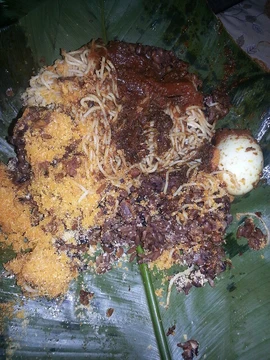
Ayilo
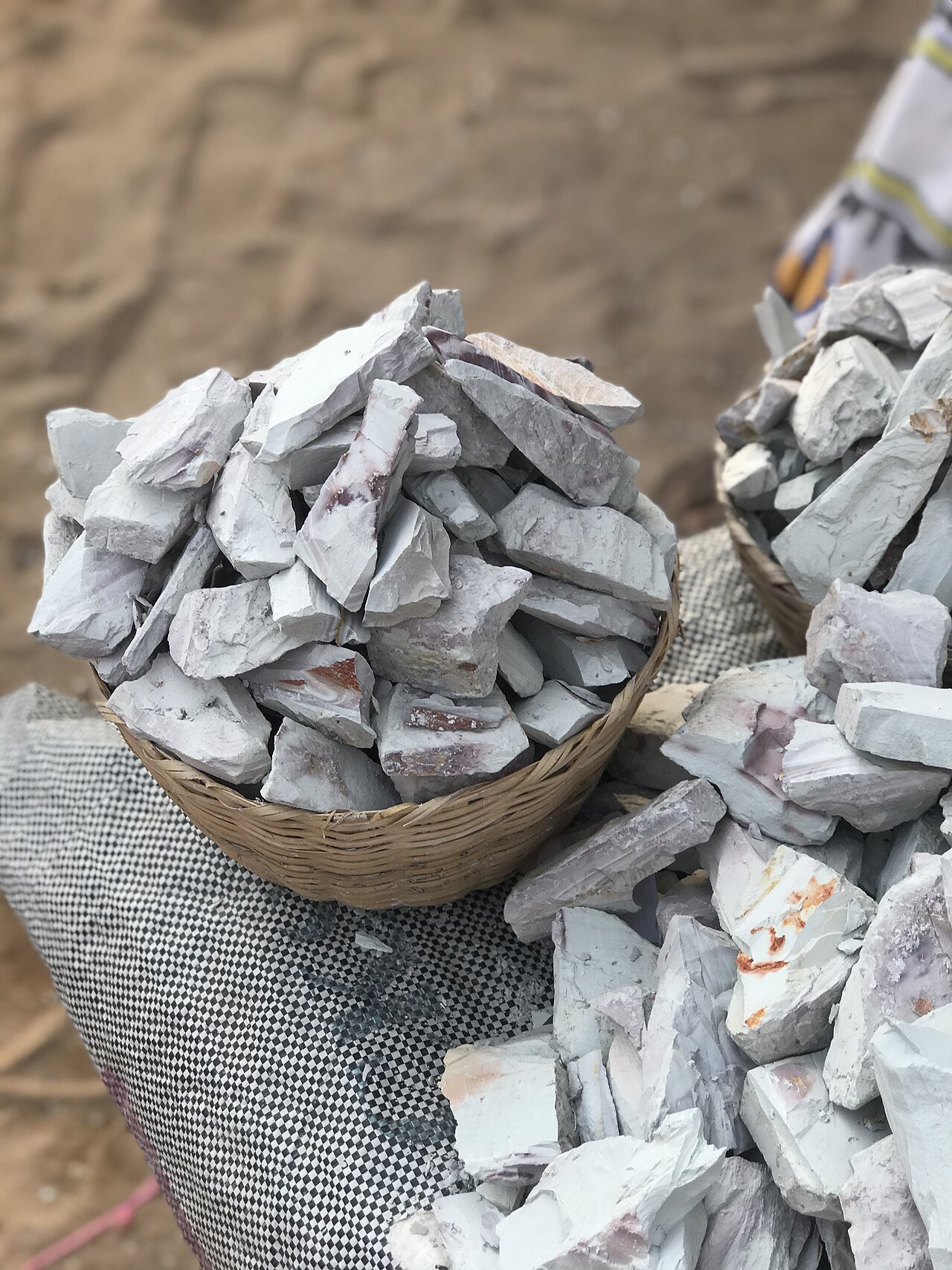
Baked white clay eaten by pregnant women in Ghana.

Wikipedia / Wikimedia Commons
Ayilo, also known as ayilor, hyile, ferinkasa, shirew, shile, agatawoe, or agatawe, is a Ghanaian term for bentonite clay. It is a baked solid white clay, typically formed into egg-shaped balls, and is most commonly consumed by pregnant women. The clay is mined primarily from a village in the Volta Region, notably from deposits at Anfoega, and is processed by breaking the raw kaolin rocks, grinding them into powder, mixing with water, shaping, and sun-baking or smoking.
- field
- Geophagy / Traditional food substance
- nationality
- Ghanaian
- known_for
- Consumed by pregnant women as a craving food; also used externally as a skin-care product
- other_names
- Ayilor, hyile, ferinkasa, shirew/shile (Akan), agatawoe/agatawe (Ewe), kaolin (English), mabele (DRC), calaba (Cameroon), Nsu (Nigeria)
Lore & Background
Ayilo is produced from kaolin-type clay that is industrially or informally mined, chiefly from deposits at Anfoega in the Volta Region of Ghana. The clay is dug from deep in the ground, broken up, and the raw ore is milled or ground into a fine powder, with larger particles and blocks removed. The powdered clay is mixed with water into a uniform paste, molded commonly into egg-shaped or sausage-shaped pieces, and then baked or sun-dried to reduce moisture and firm up the shape; in some cases it is also smoked to add aroma. The finished product is distributed to markets throughout Ghana.
Eating ayilo is a recognized instance of geophagy, classified in clinical literature as a form of pica. A 2019 study of pregnant women attending antenatal clinics in the Ho municipality of Ghana found a geophagy prevalence of 48.4% among the 217 women surveyed, with comparable figures from earlier studies in Accra, Kumasi, and other Ghanaian localities. Women most commonly cited the clay's smell and taste as reasons for eating it, alongside cravings, peer or family influence, and traditional beliefs that it relieves nausea, vomiting, and other pregnancy-related discomfort, or that it can quench hunger. Many researchers reported having first tried clay in childhood, before continuing or resuming the practice in adulthood or during pregnancy.
Multiple peer-reviewed studies have examined the mineral and microbial content of processed clay sold in Ghana as ayilo. The 2019 Ho municipality study detected essential minerals such as iron, copper, zinc, potassium, magnesium, and sodium, but also found traces of toxic elements including arsenic, manganese, lead, and nickel. The same study found common soil bacteria and fungi including Bacillus, Pseudomonas, Mucor, and Aspergillus species, some associated with gastrointestinal infection. A 2016 study of clay sold in Accra and Koforidua markets isolated fecal coliform bacteria including Klebsiella, Escherichia, Shigella, and Enterobacter species, as well as staphylococci. Most pregnant women surveyed who were aware of side effects named anaemia and constipation as common concerns.
Reader's Guide
Ayilo holds significance as a culturally embedded geophagic substance in Ghana, particularly among pregnant women who consume it for its taste, smell, and perceived relief from pregnancy discomforts. Its production is centered on Anfoega in the Volta Region, where kaolin clay is mined, processed, and distributed to markets across the country. The practice reflects both traditional beliefs and a recognized form of pica, with clinical studies documenting high prevalence rates—nearly half of pregnant women surveyed in one Ho municipality study reported eating clay. While ayilo contains some beneficial minerals, research has also detected toxic heavy metals and potentially harmful microbes, raising health concerns, especially during pregnancy. The substance is also used externally as a skin-care product, and its availability from both traditional market sellers and modern retailers underscores its continued presence in daily life. Ayilo is known by various names across West and Central Africa, including mabele in the Democratic Republic of the Congo, calaba in Cameroon, and Nsu in Nigeria, indicating a broader regional tradition of geophagy.
Did You Know?
- Ayilo is also known as ayilor, hyile, ferinkasa, shirew/shile (Akan), agatawoe/agatawe (Ewe), and kaolin (English).
- A 2019 study of pregnant women in Ho municipality, Ghana, found a geophagy prevalence of 48.4% among 217 women surveyed.
- The clay is mined primarily from deposits at Anfoega in the Volta Region of Ghana.
- Ayilo is known as mabele in the Democratic Republic of the Congo, calaba in Cameroon, and Nsu in Nigeria.
From Earth to Egg: The Making of Ayilo
Ayilo begins its journey deep beneath the soil at Anfoega, a village in Ghana's Volta Region, where kaolin-type clay deposits are extracted either through industrial operations or informal local mining. The raw ore, still bearing its natural colored layers, is hauled to the surface and broken into manageable fragments. Workers then carefully peel away the colored outer portions, leaving the pale white core that defines the finished product. This core is pounded or ground until it becomes a fine, uniform powder. The powder is combined with water to form a smooth paste, which is then molded into the familiar egg-shaped or sausage-shaped pieces that give ayilo its recognizable form. These molded shapes are left to bake in the sun or over heat, a process that reduces their moisture content and firms the clay into a solid shape. In some preparations, a light smoking step is added to impart a subtle aromatic quality. Once dried and shaped, the finished balls are distributed to markets across Ghana, where they remain a staple presence in both traditional market stalls and more modern retail settings.
A Craving Rooted in Tradition
Across Ghana, the deliberate consumption of ayilo sits firmly within the broader practice of geophagy, a behavior that clinical literature categorizes under pica. A 2019 survey of 217 pregnant women attending antenatal clinics in the Ho municipality recorded a geophagy prevalence of 48.4 percent, a figure consistent with earlier research in Accra, Kumasi, and other localities that reported rates between roughly 28 and 57 percent. When asked why they eat the clay, women most frequently pointed to its distinctive smell and taste, alongside simple cravings, the influence of family members or peers, and long-held traditional beliefs that the clay eases nausea, quiets vomiting, or takes the edge off hunger during pregnancy. Many respondents recalled first tasting clay as children and later resuming the habit in adulthood or specifically during a pregnancy. Beyond its role as a pregnancy craving food, ayilo is also marketed and used as a skin-care product, with some women applying the clay topically as well as consuming it. The product is available in both traditional market stalls and modern retail outlets, underscoring its deep entrenchment in everyday Ghanaian life.
Minerals, Metals, and Microbes: What the Clay Carries
Peer-reviewed research has probed the mineral and microbial profile of ayilo sold in Ghanaian markets, revealing a complex mixture of beneficial elements and potential hazards. The 2019 Ho municipality study detected essential minerals including iron, copper, zinc, potassium, magnesium, and sodium within the clay samples. However, the same analysis also identified trace amounts of toxic heavy metals—arsenic, manganese, lead, and nickel—prompting the authors to caution that cumulative exposure to these elements could contribute to complications during pregnancy. Microbiological testing added another layer of concern: the clay contained common soil-dwelling bacteria and fungi such as Bacillus, Pseudomonas, Mucor, and Aspergillus species, organisms linked to gastrointestinal infection and other human illness. A separate 2016 study examining clay sold in Accra and Koforidua markets isolated fecal coliform bacteria, including Klebsiella, Escherichia, Shigella, and Enterobacter, as well as staphylococci. Among the pregnant women surveyed in the 2019 study who acknowledged awareness of geophagy's side effects, anaemia and constipation were the most commonly cited concerns.
Many Names, One Clay: Ayilo Across Cultures and Borders
Few substances in West African daily life carry as many names as this particular white clay. Among the Ewe people it is called agatawoe or agatawe; the Gas refer to it as ayilo; in English-language scientific and commercial contexts it is simply kaolin; and the Akan-speaking communities know it as shirew or shile. Additional local appellations include ayilor, hyile, and ferinkasa, all pointing to the same baked, egg-shaped clay product. Its geographic heartland remains Anfoega in the Volta Region, the village where the majority of the clay bearing this name is originally extracted, though finished balls travel to markets in Accra and cities across the country. The practice of consuming this clay is not confined to Ghana. In the Democratic Republic of the Congo it is known as mabele, in Cameroon as calaba, and in Nigeria as Nsu—evidence that the tradition of eating processed kaolin clay stretches well beyond any single national border, binding communities across the region through a shared, enduring relationship with the earth.
Gallery
Frequently Asked Questions
What is Ayilo?
Ayilo is a baked, solid white clay made from bentonite (kaolin) that is traditionally consumed in Ghana. It is typically shaped into small egg-like balls before being eaten.
Who typically eats Ayilo and why?
Pregnant women in Ghana most commonly consume Ayilo as a response to food cravings during pregnancy. It falls under the broader practice of geophagy, or the intentional eating of clay.
Where is Ayilo sourced and how is it prepared?
The raw kaolin rock is mined from deposits in the Volta Region, particularly around a village called Anfoega. It is then broken apart, ground into a fine powder, mixed with water, molded into shape, and hardened through sun-baking or smoking.
What other names is Ayilo known by?
Depending on the ethnic language, the same clay may be called ayilor, hyile, ferinkasa, shirew or shile in Akan, and agatawoe or agatawe in Ewe. In English it is simply referred to as kaolin, while neighboring countries use terms like mabele (DRC) or Nsu (Nigeria).
Is Ayilo used for anything other than eating?
Yes, beyond its role as a food substance, Ayilo is also applied externally as a traditional skin-care product. This dual use—ingested and topical—makes it a notable part of Ghanaian folk practice.
More in Ghanaian cuisine 1-20
Spotted an error? Know more?
This is a living reference — every entry is fact-audited, and reader corrections feed straight into our audit queue. Suggest an edit · See this site's audit record