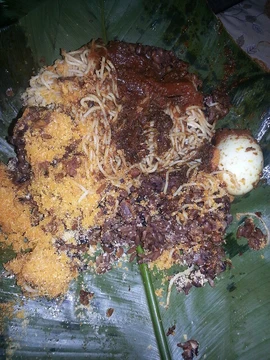
Eba
A West African swallow made from cassava flour.
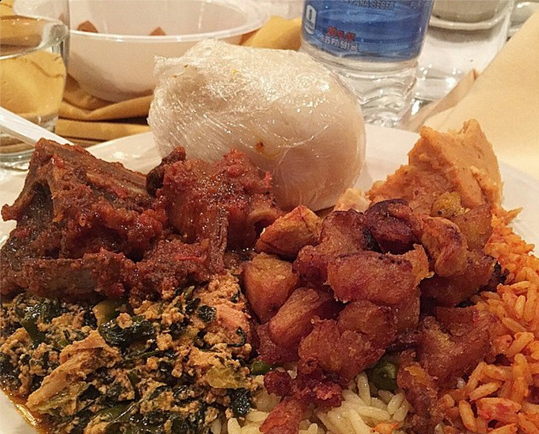
Eba (Yoruba: Ẹ̀bà), also known as Ebe or Pinon', is a staple swallow food from Nigeria, Togo, Benin, and other West African countries. It is a cooked starchy vegetable food made from dried grated cassava flour called garri, often eaten with soups and stews.
- origin
- Nigeria, Togo, Benin, and southern Ghana
- also_known_as
- Ebe, Pinon'
- main_ingredient
- Dried grated cassava (manioc) flour (garri)
- types
- White garri and yellow garri
- energy_content
- 381.5 kcal per 100 g
- protein_content
- 0.9 g per 100 g
Lore & Background
Eba is a staple food in West Africa, particularly in Nigeria, Togo, Benin, and southern Ghana. The term Ẹ̀bà originates from the Yoruba language. It is made from garri, which is dried grated cassava flour, and is prepared by mixing blended garri flour into hot water and stirring vigorously with a wooden spatula until it forms a firm dough that can be rolled into a ball. The dish can vary in color from deep yellow to off white, depending on the type of garri used; yellow garri is fried with palm oil, while white garri is fried without palm oil and has a slightly more acidic, sharper taste.
Reader's Guide
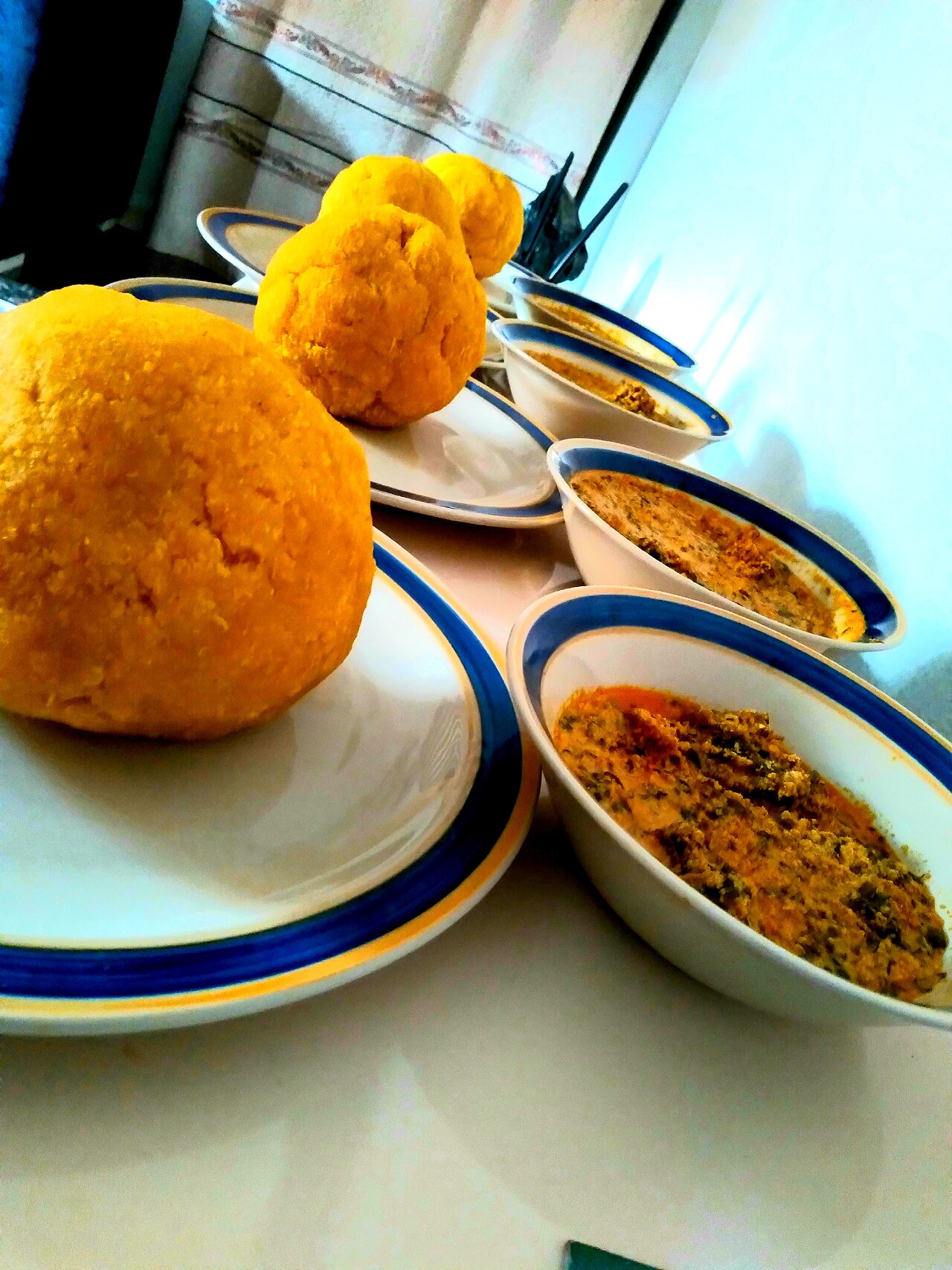
Eba is a significant staple in West African cuisine, serving as a common swallow food consumed with a variety of rich soups and stews, such as okra soup, bitter leaf soup, egusi soup, and banga soup. It is eaten with the fingers, rolled into a small ball, and dipped into these accompaniments. Nutritionally, eba is rich in starch and carbohydrates, with a gross energy content of 381.5 kcal per 100 g, higher than other cassava products like fufu and lafun. However, its crude protein content is slightly lower. The dish is often described as having a slightly sour, sharp taste, and its preparation and color can vary based on the type of garri used, with palm oil added for a bright yellow hue.
Did You Know?
- Eba is also known as Ebe or Pinon' in Togo, Benin, and southern Ghana.
- The term Ẹ̀bà originates from the Yoruba language.
- Yellow garri is fried with palm oil, while white garri is fried without palm oil and is more acidic.
- Eba has a gross energy content of 381.5 kcal, higher than fufu and lafun.
Origins & Etymology
The name fufu traces back to the Twi language of the Akan peoples in what is now modern-day Ghana. According to historian Miller, the word literally translates to 'white' in Twi, a reference most likely tied to the pale hue of the cassava that forms its base. The dish is believed to have been developed by several Akan subgroups—the Asante, Akuapem, Akyem, Bono, and Fante—and it went on to become a cornerstone of the Ashanti Empire's cuisine. Over time, the term expanded far beyond its Ghanaian roots. Today the word and its many local spellings, from foutou in Côte d'Ivoire to akpụ in Igbo-speaking Nigeria, encompass a broad family of pounded staple meals stretching across West and Central Africa, the Greater Antilles, and parts of Central America wherever African culinary traditions took hold. This linguistic spread reflects both the dish's deep cultural weight and its remarkable adaptability across dozens of distinct food traditions.
Regional Variations & Preparation Methods
In Ghana, the classic preparation involves boiling cassava alongside green plantain or cocoyam, then pounding the mixture in a hand-carved wooden mortar called a woduro with a matching pestle known as a woma. Between strikes, the cook turns the mass by hand and gradually adds water until it reaches a soft, sticky consistency, which is then shaped into a rounded slab. In Nigeria, by contrast, fufu—often called akpụ in Igbo—relies exclusively on fermented cassava. The process is far more time-consuming: raw cassava is peeled, soaked for three to four days to soften, filtered through a porous calabash, drained under a heavy weight, then pounded, molded into large balls, briefly simmered, pounded again to eliminate lumps, reshaped into smaller balls, boiled for fifteen to twenty minutes, and finally pounded until perfectly smooth. In Côte d'Ivoire, the distinction between foufou (mashed sweet plantains) and foutou (a denser paste of yam, cassava, plantain, or taro) highlights how even neighboring countries draw different lines around the same basic concept.
Historical Context & Cultural Significance
Long before Portuguese traders carried cassava from Brazil to the African coast in the sixteenth century, the pounded meals we now call fufu were built on cocoyam, plantain, and yam. The introduction of cassava transformed the dish's texture and accessibility, yet the fundamental technique of pounding and shaping a starchy staple for dipping into soup remained unchanged. The dish's cultural centrality is underscored by its appearance in Chinua Achebe's Things Fall Apart, a novel that embedded fufu firmly within the literary landscape of West Africa. Traditionally, the eater pinches a portion off with the fingers of the right hand, rolls it into a small, manageable ball, and dips it into an accompanying broth before swallowing. In Ghana this might be a light soup, palm nut soup, or peanut butter soup; in Nigeria, egusi or ogbono. The ritual of hand-eating, the communal pounding, and the pairing of a neutral starch with a rich, spiced liquid together make fufu far more than sustenance—it is a daily act of cultural continuity.
Diaspora & Modern Adaptations
The story of fufu extends well beyond Africa's shores. In Cuba, the dish keeps its African-derived name, appearing as fufú or fufú de plátano; in the Dominican Republic, the closely related mangú is prepared from mashed boiled green plantains; and in Haiti it is known as tomtom. Across the Caribbean, plantains, cassava, and yams continue to be mashed in ways that echo the original West African technique. Closer to home, the dish has adapted to urban and diasporic life. Where families once relied on farmland-grown cassava, those in cities or abroad now substitute wheat semolina, maize flour, or mashed plantains to achieve a similar texture. The invention of the mechanical fufu machine has also dramatically reduced the physical labor once required for pounding. Yet in rural communities with direct access to the land, the original cassava-based recipe endures, preserving a culinary thread that stretches back centuries.
Gallery


Frequently Asked Questions
Who is Eba and where did they come from?
Eba is a traditional West African swallow dish that traces its roots to Nigeria, Togo, Benin, and southern Ghana. It is also recognized by the names Ebe and Pinon' depending on the region.
What is Eba's core ingredient and how is it made?
Eba is formed from garri, which is dried, grated cassava (manioc) flour that gets cooked with hot water until it thickens into a pliable, dough-like mass. The process turns a dry, powdery staple into a smooth, stretchy swallow.
What are Eba's powers or role on the plate?
Eba serves as the starchy base that soaks up and complements rich soups and stews, acting as the edible spoon of the meal. It delivers roughly 381.5 kcal per 100 g, making it a dense, energy-packed component of a West African plate.
What forms does Eba take?
Eba appears in two main varieties: white garri and yellow garri, the latter getting its color from the natural pigments in the cassava. Both types share the same cooking method and texture, differing mainly in hue and subtle flavor notes.
Why is Eba important to the community?
As a daily staple across multiple West African nations, Eba anchors countless family meals and communal gatherings. Its simplicity—just cassava flour and hot water—makes it accessible, while its pairing with diverse stews keeps the dish endlessly versatile.
More in Ghanaian cuisine 1-20
Spotted an error? Know more?
This is a living reference — every entry is fact-audited, and reader corrections feed straight into our audit queue. Suggest an edit · See this site's audit record