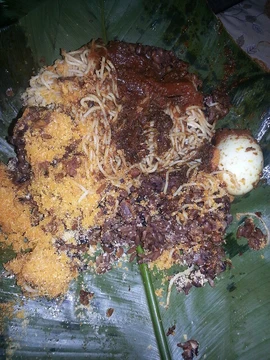
Banku (dish)
A fermented maize and cassava dough staple of Ghana.

Wikipedia / Wikimedia Commons
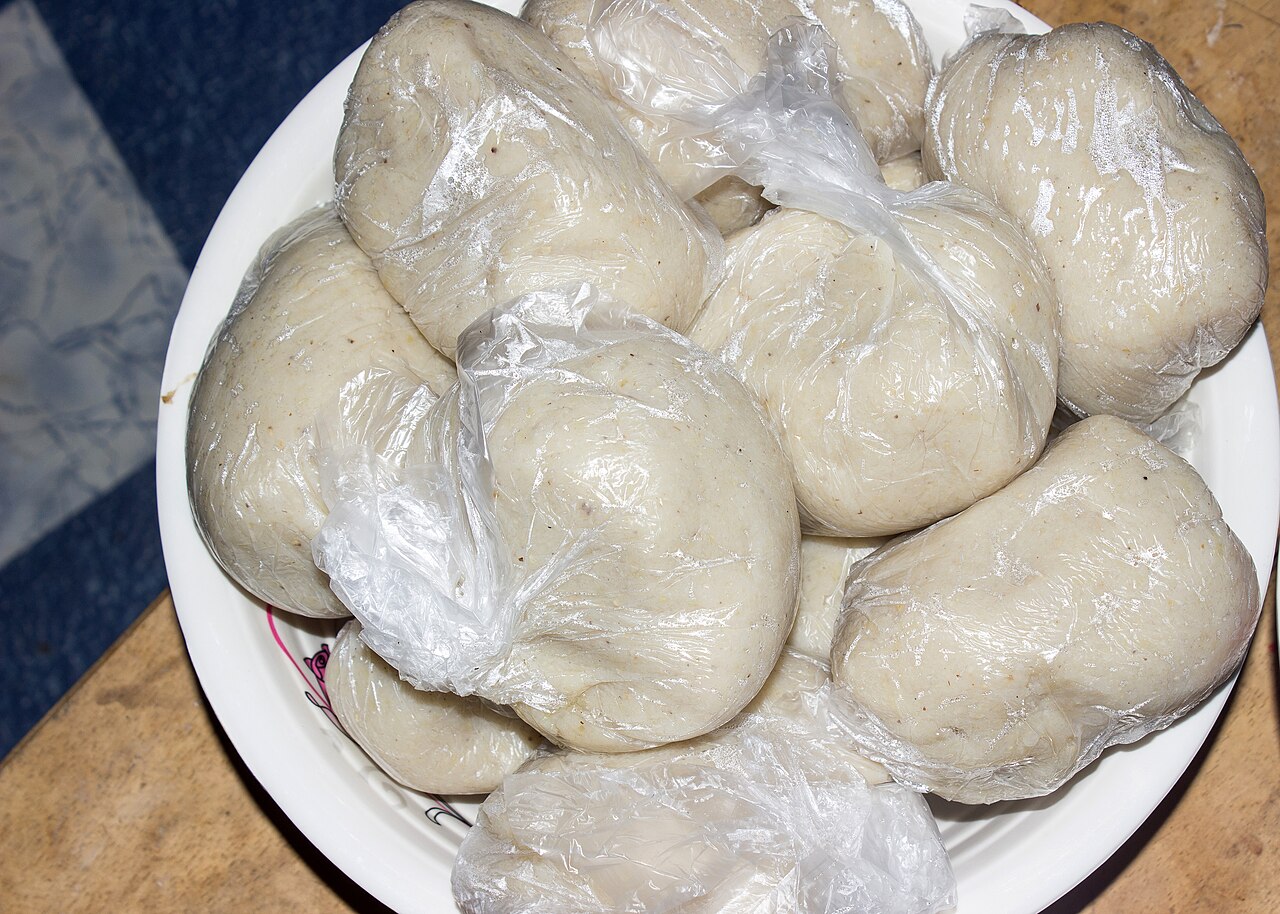
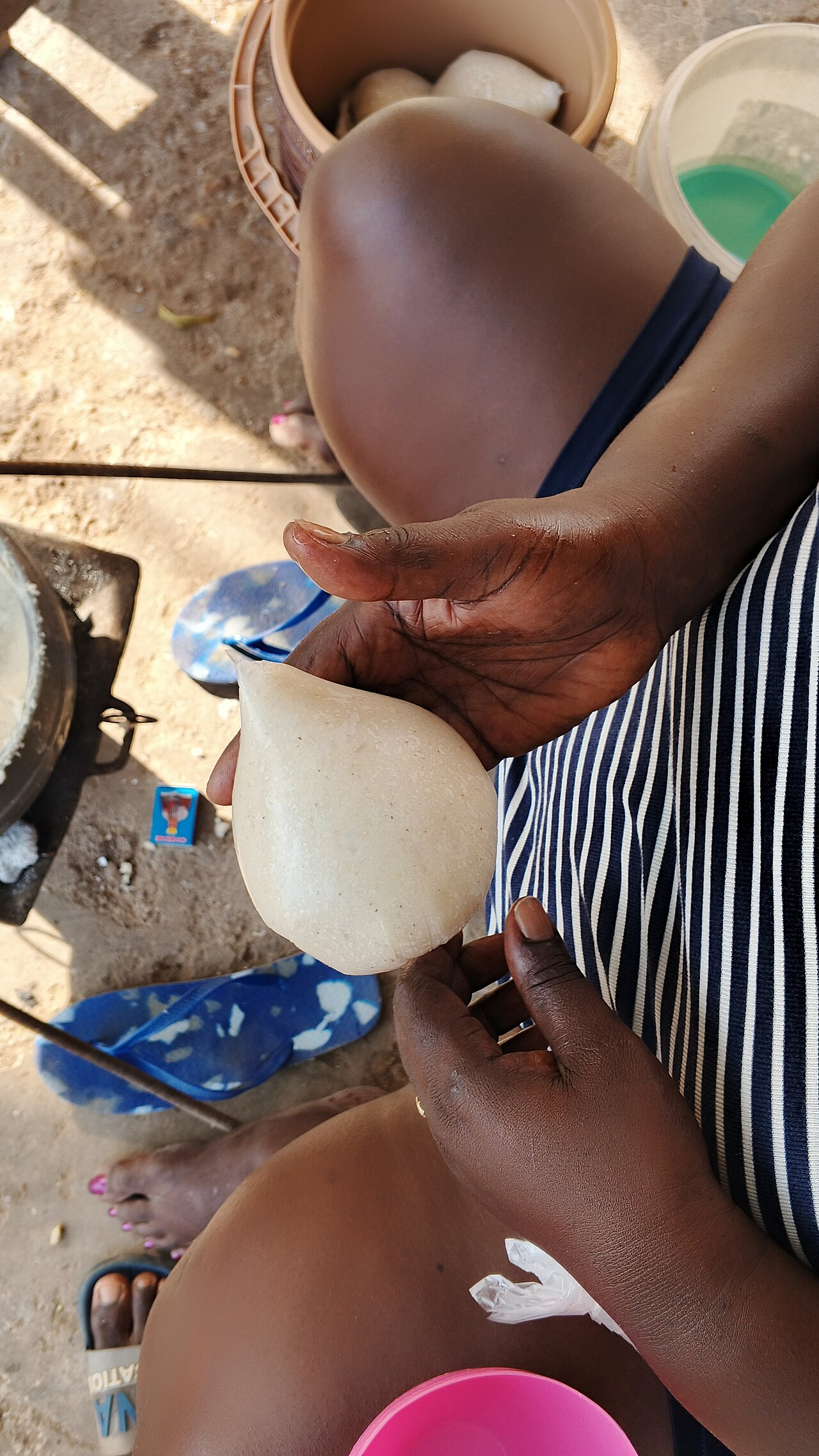
Banku is a staple dish in Ghanaian cuisine, made from a slightly fermented cooked mixture of maize and cassava doughs formed into single-serving balls. It is a softer variety of the dish, distinct from the drier variant akple, and is particularly associated with the Ga-Dangme people.
- type
- Staple dish
- origin
- Ghana
- associated_peoples
- Ga-Dangme (Ga or Dangbe)
- main_ingredients
- Corn flour, cassava, salt, water
- serving_tradition
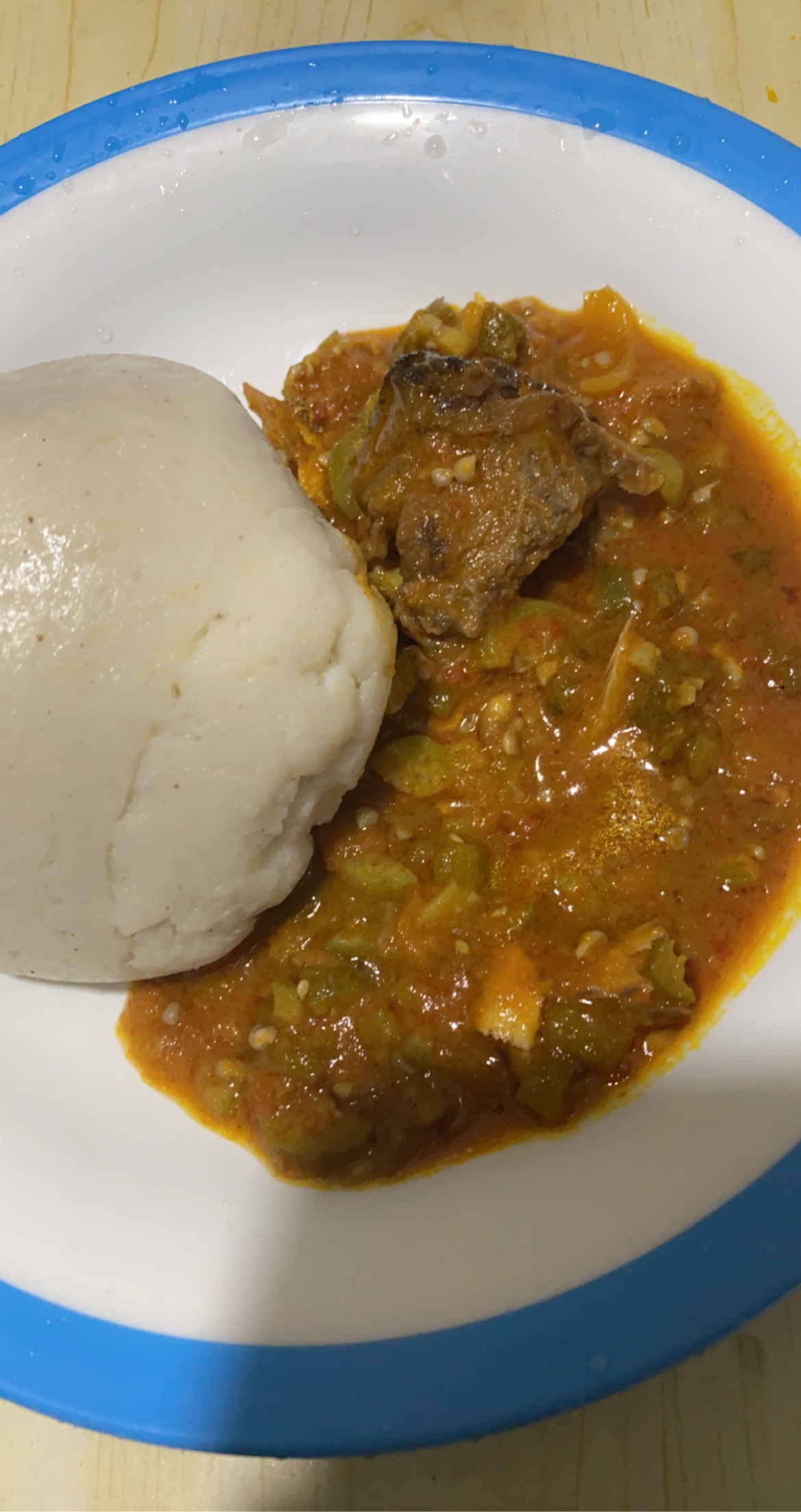
- Eaten with the hands, served with soup, okra stew, or pepper sauce with fish
Lore & Background
Banku is a distinctively Ga-Dangme term, coined from the Dangbe phrase 'ba mi ku', meaning 'ku in leaves'. Historically, banku was stored in leaves, and the phrase has been adulterated over time into banku. Similar tonal terms exist in the Ga language, such as inku and ashanku, all ending in 'ku'.
Reader's Guide
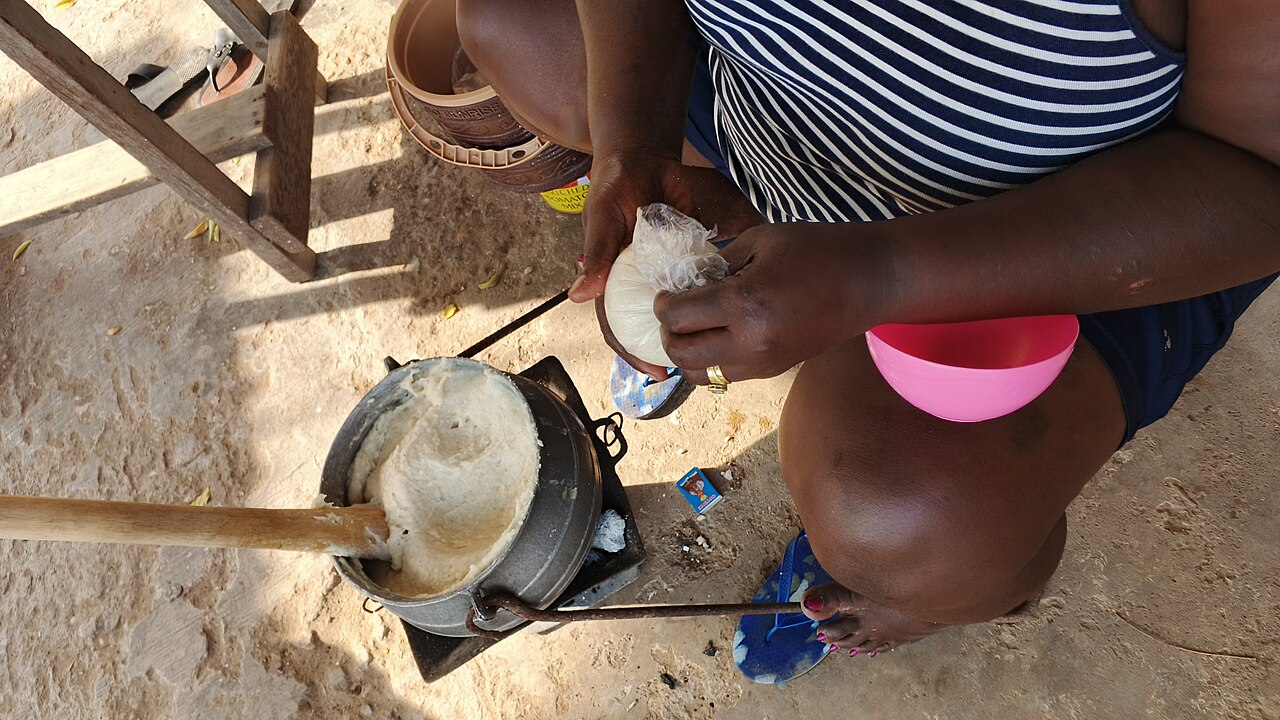
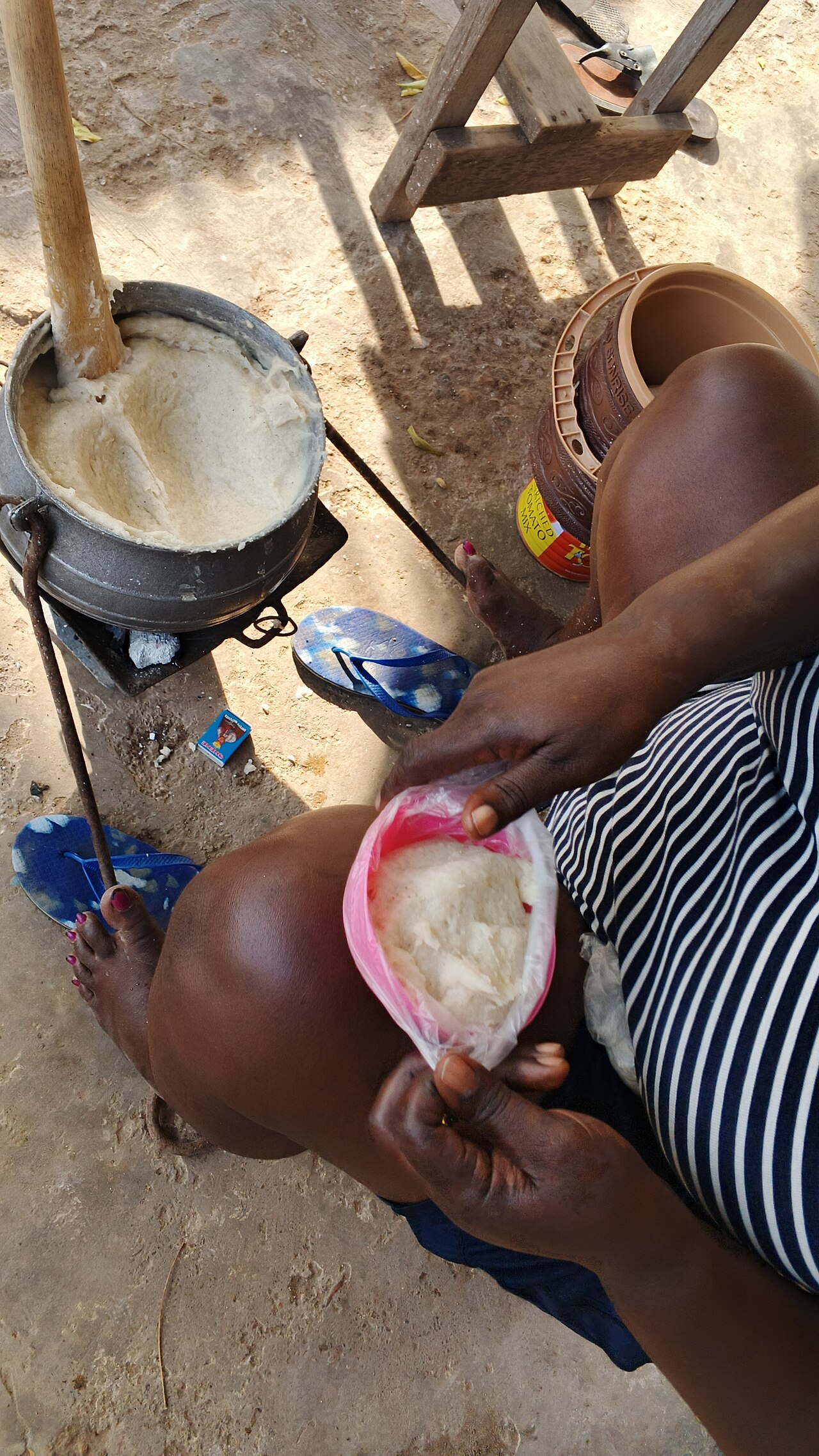
Banku is prepared by peeling and chopping cassava, mixing it with corn grains, and soaking for a day. The water is poured off, and the mixture is milled into a smooth, wet dough, which is then fermented for two to five days. The dough is boiled with water, stirred until dough-like, kneaded, and steamed repeatedly until soft and evenly cooked, then portioned into small balls. Banku is traditionally eaten with the hands and served with soup, okra stew, or pepper sauce with fish. It is a softer variety than akple, which is preferred by the Ewe, Fante, and Ga-Dangme peoples of southern Ghana, though both dishes share similar ingredients and preparation methods.
Did You Know?
- Banku is coined from the Dangbe phrase 'ba mi ku', meaning 'ku in leaves'.
- The dough for banku is fermented for two to five days, depending on temperature.
- Banku is a softer variety of the dish, while the Fante people have a drier variant called ɛtsew.
- Banku is traditionally eaten with the hands.
Regional Identity and the Banku-Akple Distinction
Banku occupies a central place in Ghanaian food culture, yet its identity shifts subtly depending on who is preparing and eating it. The dish sits alongside its close relative akple as a fermented maize-and-cassava staple, but the two are not interchangeable. In the southern regions, the Ewe, Fante, and Ga-Dangme communities each claim their own relationship to the preparation. The Ga-Dangme people favor a softer, more pliable version that they call banku, while the Fante have developed a drier, firmer variant they name ɛtsew. Akple, though rooted in Ewe, Fante, and Ga-Dangme traditions, has spread well beyond those borders and is now recognized across the country. This regional layering means that a single bowl of fermented dough can carry very different cultural signatures depending on the household, the coast, or the inland village where it is served. The dish thus functions not merely as sustenance but as a marker of ethnic and geographic belonging within Ghana's diverse culinary landscape.
Etymology and the Language of Leaves
The name banku carries a small piece of agricultural history embedded in its syllables. It is a distinctly Ga-Dangme word, born from the Dangbe phrase "ba mi ku." In that older construction, "ba" refers to a leaf or leaf vessel, while "ku" is a broad Ga-Dangme category term covering any food of comparable texture and preparation method. Historically, the finished dough was stored and served wrapped in leaves, so the phrase literally meant "ku in leaves." Over generations of everyday speech, the three-word phrase compressed and softened into the single word banku. The Ga language is rich with tonal cousins of this root: inku denotes a type of pomade, ashanku names a variant of the plantain fritter known as tatale, and numerous other food-related terms share the "ku" ending. This linguistic family reveals how deeply the texture and handling of fermented dough are woven into the Ga-Dangme lexicon, making the name itself a small act of cultural memory.
The Slow Craft of Fermentation and Kneading
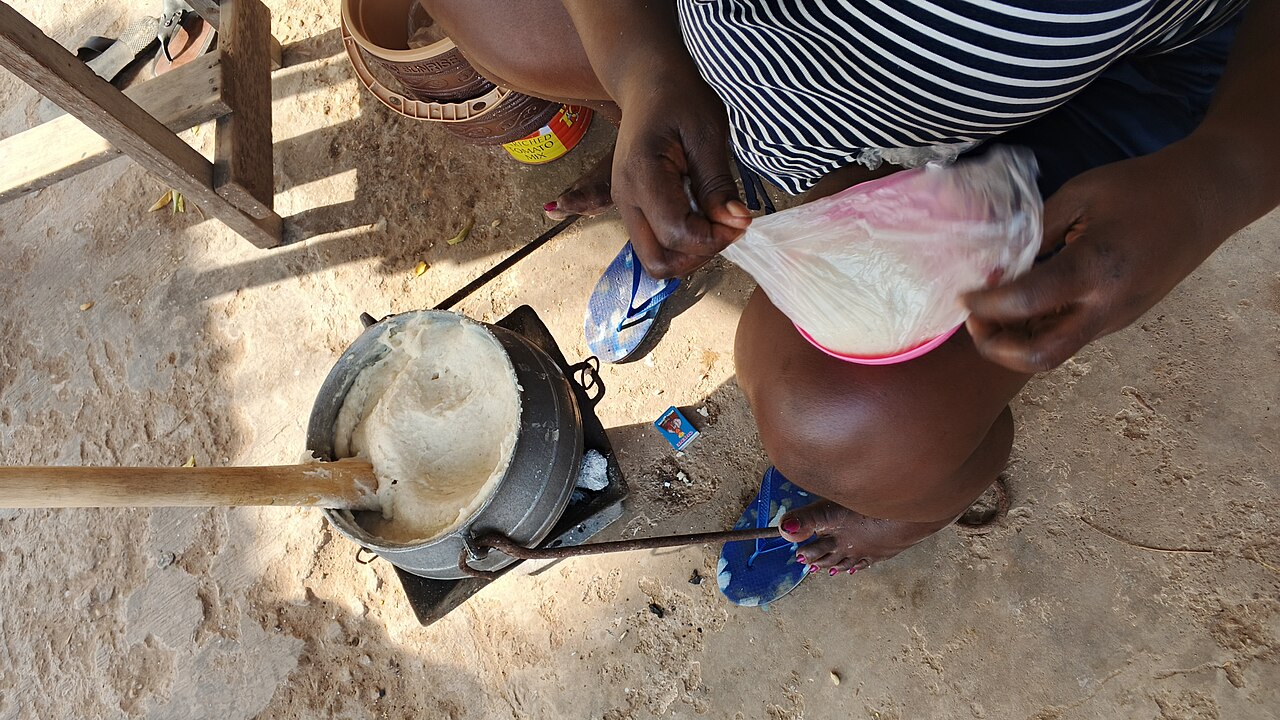
Preparing banku is a patient, multi-day undertaking that rewards attention at every stage. The cook begins by peeling and chopping cassava, then mixing it with whole corn grains and soaking the combination for a full day. Once the soaking water is drained, the softened cassava and maize are milled together into a fine, wet, smooth dough. That dough is then left to ferment for anywhere from two to five days, the exact duration governed by ambient temperature. After fermentation, the mixture is combined with fresh water and brought to a boil. The cook stirs gradually as the slurry thickens back into a dough-like mass, then kneads it until smooth. Water is added around the central dough island in the pan, nearly covering the surface, and the pot is sealed tightly so the dough steams and cooks evenly. The dough is kneaded with a spatula to fold in the water, and this cycle of centering, watering, and kneading is repeated until the final product is uniformly soft and cooked through. The finished dough is then portioned into small, individual serving balls.
The Table, the Hands, and the Soup
Banku is a dish that demands to be eaten with the hands, a practice that shapes its texture and the way it is experienced at the table. The cooked dough, smooth and whitish, is torn or scooped and paired with a liquid accompaniment that softens it further. Among the Ewe, the classic partner is an okra soup called fetri detsi, while across broader Ghanaian practice the dough may be served alongside a pepper sauce studded with fish, a rich meat stew, or a lighter soup. The single-serving ball format makes the dish inherently individual: each person receives their own portion of dough to work with, tearing off pieces and dipping them into the communal pot of sauce or stew. This hand-to-mouth interaction gives banku a tactile, almost ritual quality that distinguishes it from spoon-eaten staples. Whether the accompaniment is the thick, mucilaginous okra of the Ewe tradition or a fiery pepper sauce with flaked fish, the interplay between the soft fermented dough and the bold, saucy topping defines the eating experience and anchors banku firmly in the daily food culture of Ghana's coastal and southern communities.
Gallery
Frequently Asked Questions
Who is Banku (dish)?
Banku is a staple food that hails from Ghana and is especially tied to the Ga-Dangme (Ga or Dangbe) communities. It is a soft, slightly fermented ball of cooked maize and cassava dough that anchors the daily diet for millions of Ghanaians.
What are Banku (dish)'s powers/role in a meal?
Banku serves as the carbohydrate backbone of the plate, built to soak up and carry the flavors of a rich soup, okra stew, or pepper sauce with fish. Its soft, mildly tangy texture is specifically engineered to pair with wet, savory broths rather than standing alone.
How does Banku (dish)'s story end at the table?
The meal wraps up with the diner using their bare hands to tear off pieces of the dough ball and dip them into the accompanying stew or sauce. No fork or spoon is involved; the entire eating experience is a tactile, hands-on ritual.
Why is Banku (dish) important to Ghanaian food culture?
Prepared from humble, widely available ingredients—corn flour, cassava, salt, and water—Banku provides affordable, reliable nutrition for everyday life. It also carries cultural weight, acting as a culinary signature of the Ga-Dangme people and a shared national staple.
What separates Banku from its drier rival, Akple?
Both are fermented maize-and-cassava staples, but Banku is the softer, moister variant while Akple is noticeably drier and more crumbly. This textural difference means each pairs best with different types of soups and sauces, giving diners two distinct eating experiences from the same core ingredients.
More in Ghanaian cuisine 1-20
Spotted an error? Know more?
This is a living reference — every entry is fact-audited, and reader corrections feed straight into our audit queue. Suggest an edit · See this site's audit record