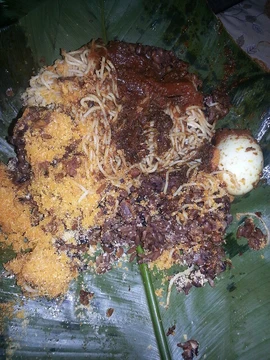
Aprapransa
A Ghanaian GaDangme dish of roasted corn flour and palm nut soup.

Wikipedia / Wikimedia Commons
Aprapransa, originally called 'akplijii' (or 'akplidzi'), is a Ghanaian GaDangme (or Ga) dish prepared by heat mixing roasted corn flour with palm nut soup. It is a complete meal with its soup integrated, and its name derives from the phrase 'prapra wo nsa' (wipe your hand). The dish is served on special occasions and is feared to go extinct.
- origin
- GaDangme (or Ga) people of Ghana
- also known as
- Akplijii or Akplidzi
- main ingredients
- Roasted corn flour (Tom brown), palm nut or palm oil, beans, vegetables, seafood
- served on
- Special occasions such as marriage ceremonies, naming ceremonies, birthday celebrations, family cookouts
- status
- Feared to go extinct
Lore & Background
Aprapransa, originally called 'akplijii' (or 'akplidzi'), is a Ghanaian GaDangme (or Ga) dish prepared by heat mixing roasted corn flour with palm nut soup. Palm Nut Soup is an important base ingredient and is also an ancient sacred soup of the GaDangme people, always prepared as a complement to another sacred corn flour meal called Kpokpoi (or Kpekpele) during the Ancient Religious Hebraic Harvest Festival called Homowo. The GaDangme people brought these practices to Ancient Ghana and taught all the tribes how to prepare Palm Nut Soup.
Reader's Guide
Aprapransa holds significance as a traditional GaDangme dish that integrates roasted corn flour with palm nut soup, forming a complete meal. Its name reflects the practice of wiping one's hand to eat, as the soup is already mixed in. The dish is not commonly found on the streets or prepared daily; it is reserved for special occasions such as marriages, naming ceremonies, and birthdays, particularly among the Akan tribe. The palm nut soup base has ancient sacred origins, used in the Homowo festival alongside Kpokpoi. Over time, the knowledge of palm nut soup preparation became common in Ghana, losing its sacred status. The dish is feared to go extinct, highlighting its declining prevalence. Outside Ghana, variations like Banga Soup exist among Nigerian tribes such as the Yorubas and Igbos.
Did You Know?
- Aprapransa was originally called 'akplijii' or 'akplidzi'.
- Palm Nut Soup is an ancient sacred soup of the GaDangme people, used in the Homowo festival.
- The GaDangme people taught all tribes in Ancient Ghana how to prepare Palm Nut Soup.
- The dish's name comes from the phrase 'prapra wo nsa', meaning 'wipe your hand'.
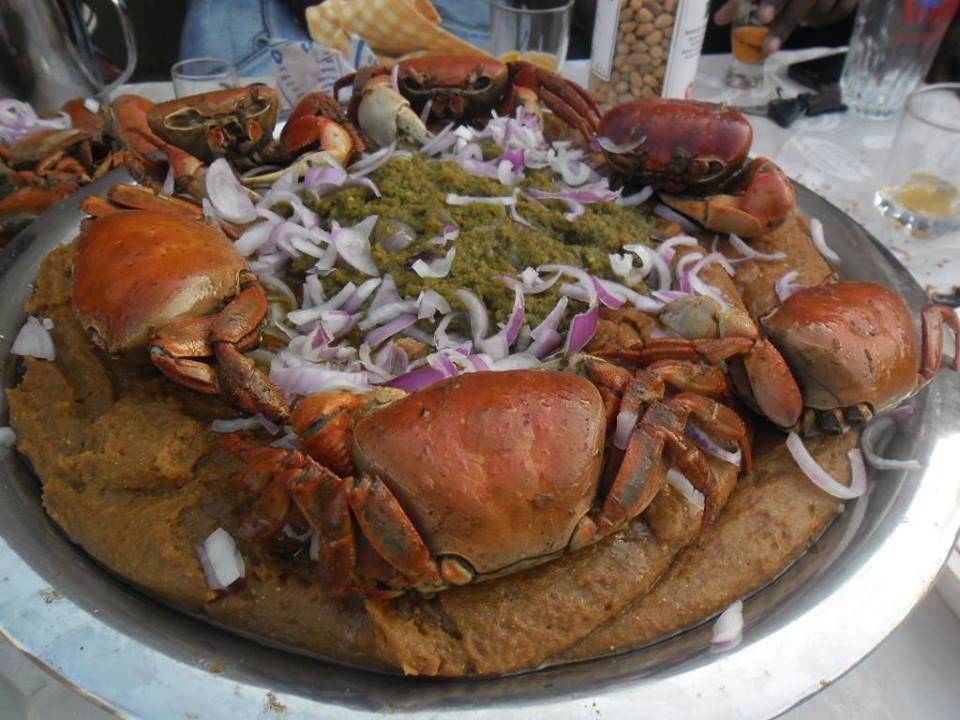
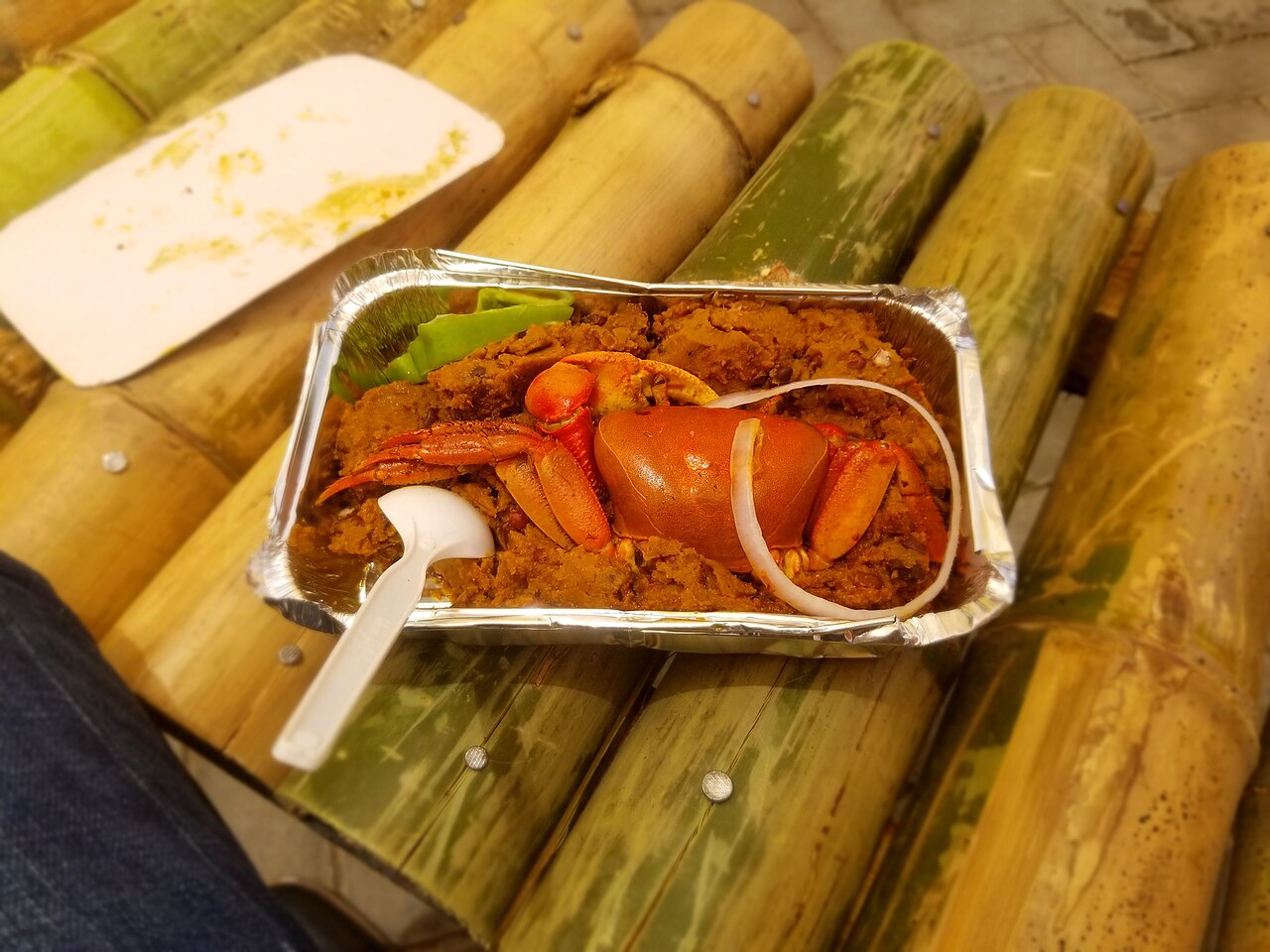
Gallery
Frequently Asked Questions
What is Aprapransa?
Aprapransa is a traditional GaDangme dish from Ghana in which roasted corn flour is heat-mixed directly into a palm nut soup, producing a single, self-contained meal. Its name comes from the Ga phrase 'prapra wo nsa,' meaning 'wipe your hand.'
What other names does Aprapransa go by?
The dish is also called Akplijii or Akplidzi, names rooted in the GaDangme language. These alternate forms are used interchangeably within the community.
What ingredients go into Aprapransa?
The core components are roasted corn flour (known as Tom brown) combined with palm nut or palm oil, along with beans, vegetables, and seafood. The soup is integrated into the flour mixture rather than served as a separate element.
On what occasions is Aprapransa traditionally served?
It is reserved for special celebrations such as marriage ceremonies, naming ceremonies, birthday parties, and family cookouts. It is not an everyday meal but rather a dish tied to communal gatherings.
Why is Aprapransa considered at risk?
The dish is widely feared to be heading toward extinction as fewer people in the GaDangme community still prepare it. Its specialized heat-mixing technique and limited occasions for serving make it vulnerable to being lost over time.
More in Ghanaian cuisine 1-20
Spotted an error? Know more?
This is a living reference — every entry is fact-audited, and reader corrections feed straight into our audit queue. Suggest an edit · See this site's audit record