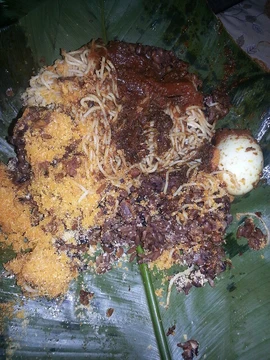
Kenkey
Fermented maize dumpling staple of Ga and Fante regions.
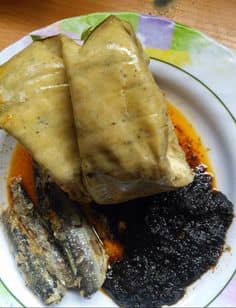
Kenkey, also called kɔmi, otim, kooboo, or dorkunu/dokunu, is a staple swallow food from the Ga and Fante regions of West Africa. Similar to sourdough dumplings, it is typically eaten with pepper crudaiola and fried fish, soup, or stew.
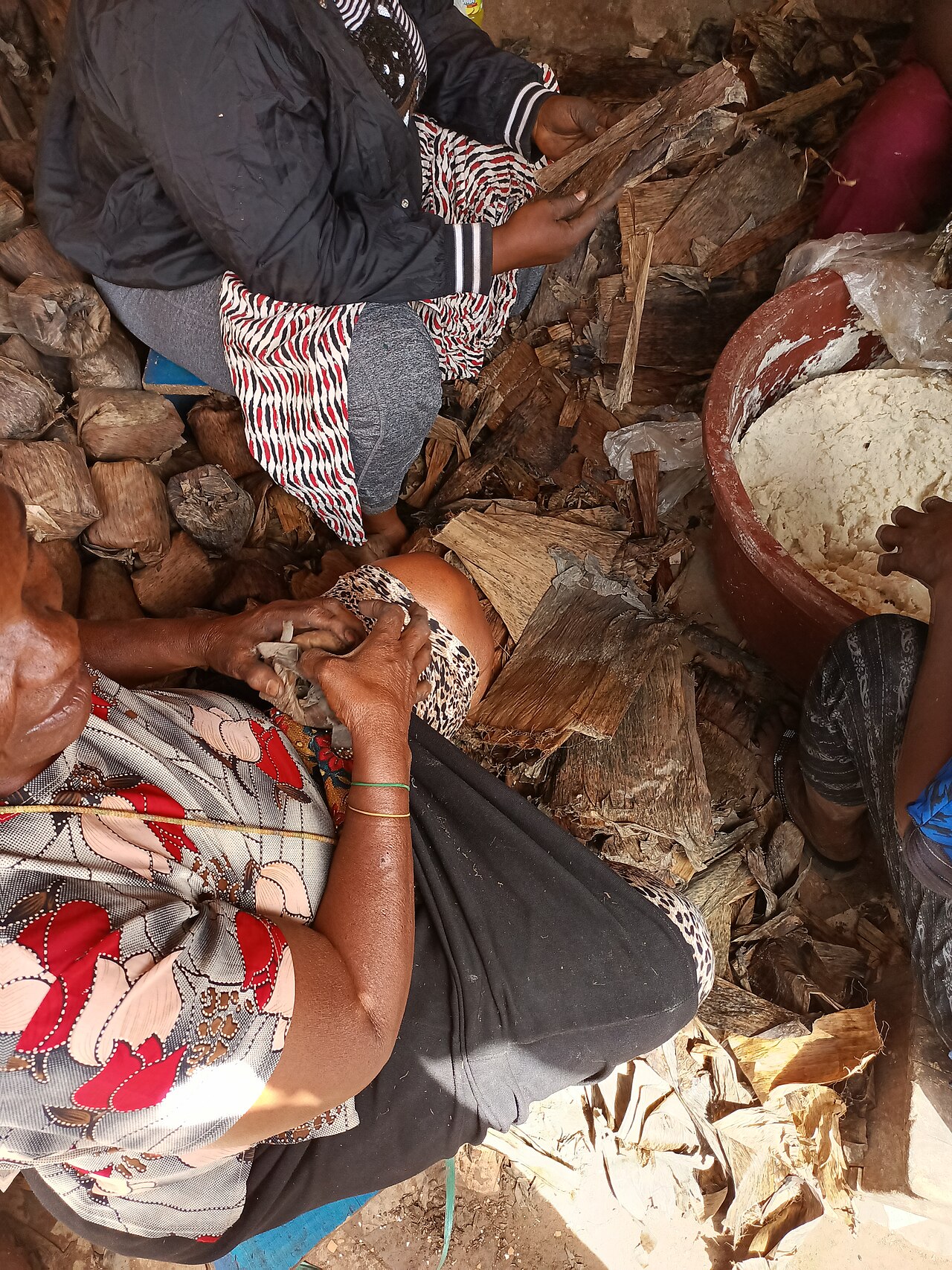
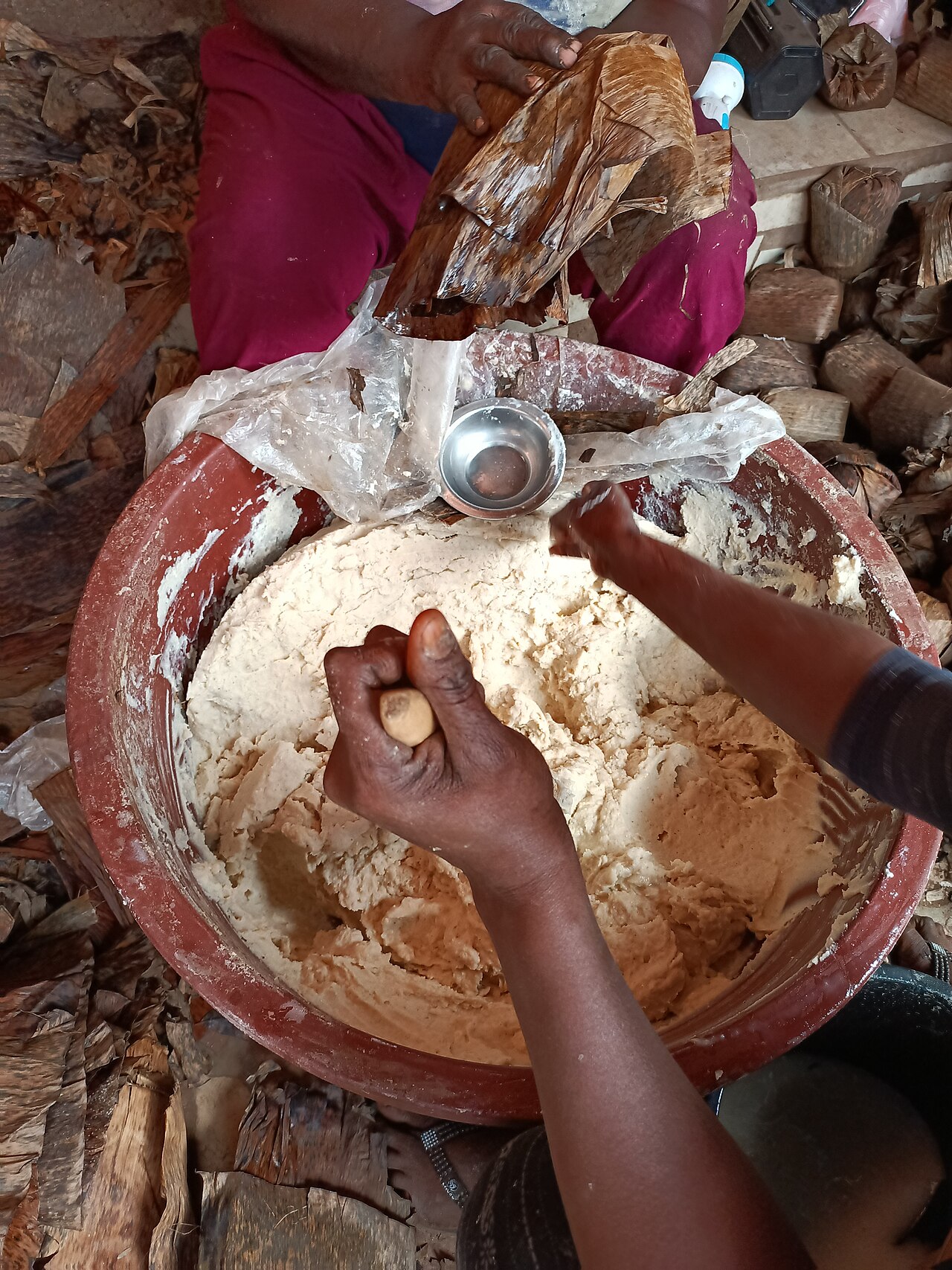
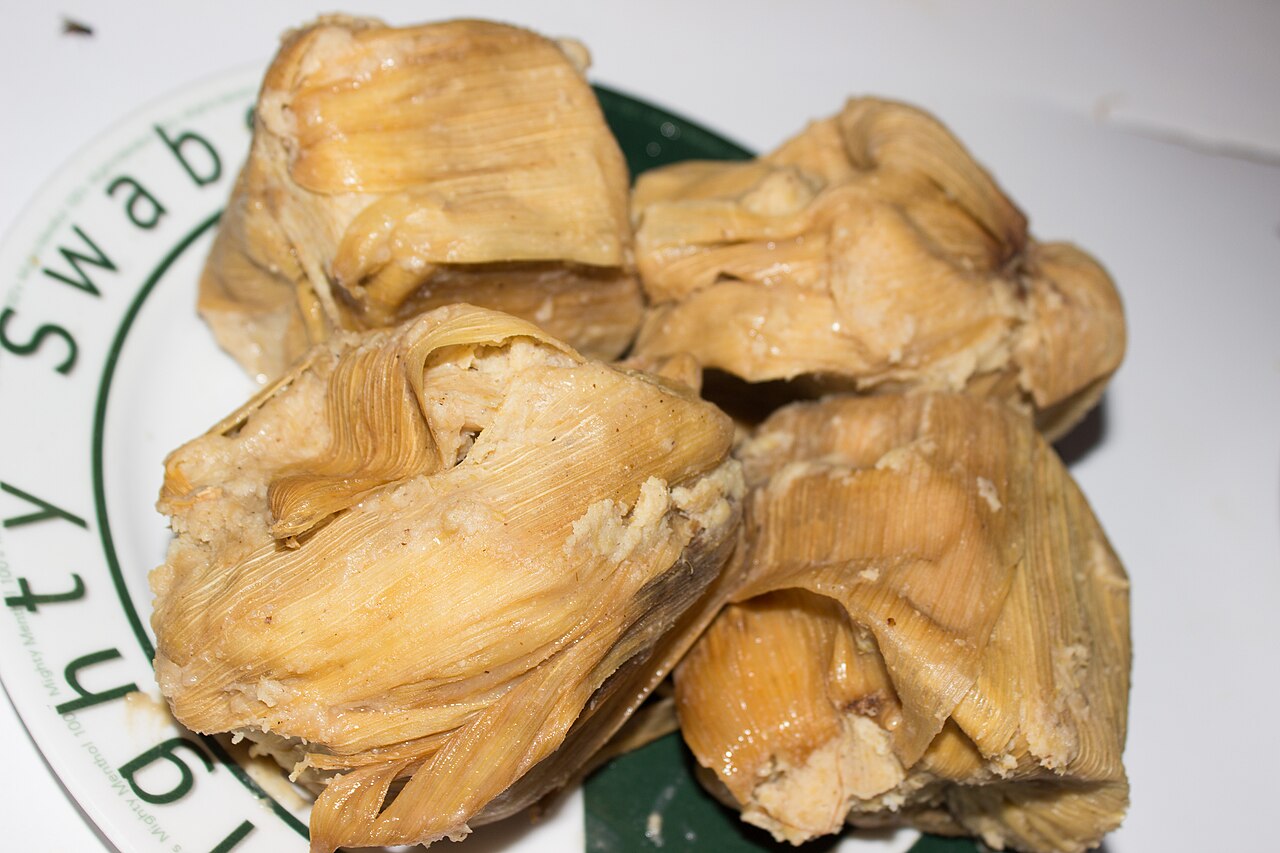
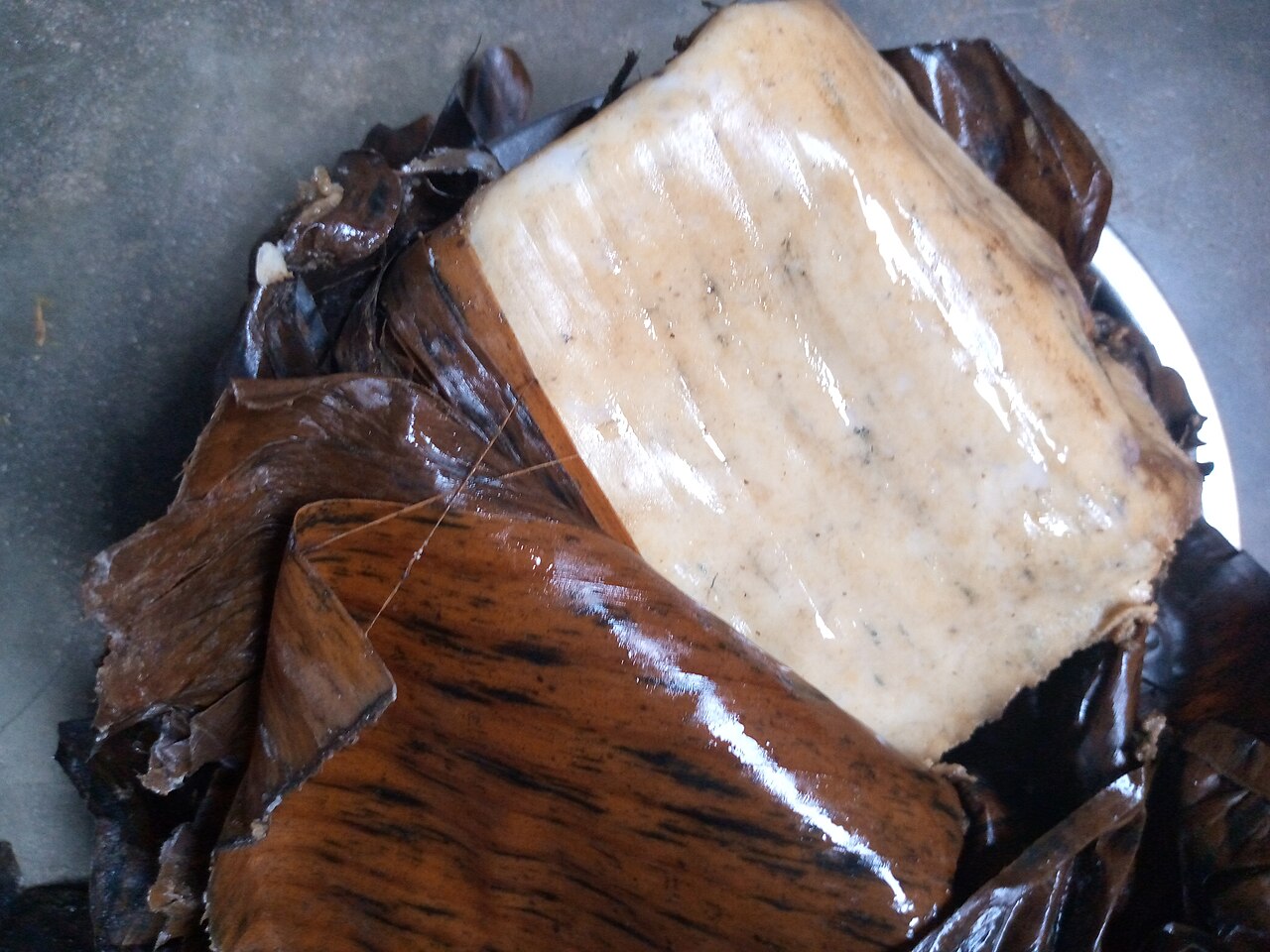
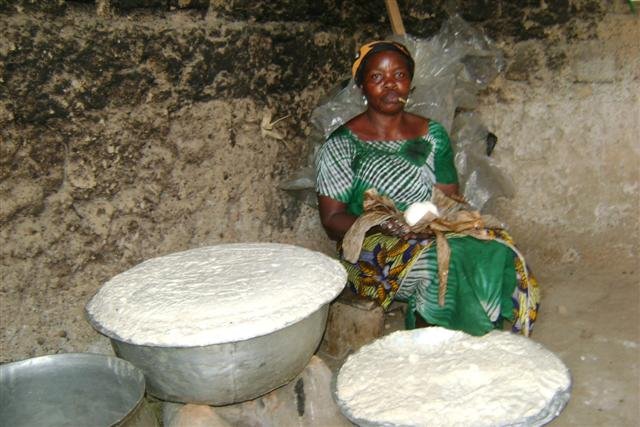
To make kenkey, maize grains are soaked in water for about a week, then ground and mixed with water into a dough. This dough ferments for four days to a week, after which part of it is cooked. The preparation takes several days because the maize must ferment before cooking. After fermentation, the dough is partially cooked, wrapped in banana leaves, corn husks, or foil, and steamed. There are different versions, including Ga and Fante kenkey, with Ga kenkey being more common in most of Ghana.
Kenkey is eaten in Ghana, eastern Côte d'Ivoire, Togo, and western Benin. It is made from ground corn (maize), similar to sadza and ugali. The Gas call it kɔmi (pronounced kormi), while the Akans in Ghana call it dokono. Unlike ugali, kenkey requires fermentation before cooking.
In the Caribbean, variations of a sweet tamale—an indigenous Mesoamerican dessert—were adopted by Africans during slavery and indentureship. African influence appears in names like ducana (Antigua and Barbuda), duckunoo/duckanoo (also blue drawers or tie-a-leaf in Jamaica), doukounou (Haiti), ducunu/dukunu (also tamalito in Belize), and dokonon (French Guiana). In Guyana, it is called conkie (pronounced /kankee/), and in Trinidad and Tobago, paime (pronounced /pay-me/), which differs by not containing plantain but may include coconut, pumpkin, or raisins, and is often associated with Christmas. In Latin America, it is made with cornmeal, masa, or yuca; in the Caribbean, typically with cornmeal, plantain, or sweet potato. Maize and sweet potato were staples of indigenous Amerindians, so Jamaicans and other Antilleans often add sweet potato and grated green bananas to cornmeal or flour with coconut, sugar, spices, and vanilla, then wrap the mixture in banana leaves and steam it.
Ice kenkey is a meal made from kenkey mixed with water, sugar, powdered milk, and ice.
- type
- Staple food
- region
- West Africa (Ghana, eastern Côte d'Ivoire, Togo, western Benin)
- main_ingredient
- Maize (corn)
- also_known_as
- kɔmi, otim, kooboo, dorkunu, dokunu
- served_with
- Pepper crudaiola and fried fish, soup or stew
- variations
- Ga kenkey, Fante kenkey, ice kenkey
Lore & Background
Kenkey is produced by steeping grains of maize in water for about one week, then milling them and kneading them with water into a dough. The dough is allowed to ferment for four days to a week before part of the dough is cooked. Unlike ugali, making kenkey involves letting the maize ferment before cooking, so preparation takes a few days. After fermentation, the kenkey is partially cooked, wrapped in banana leaves, corn husks, or foil, and steamed. There are several versions, such as Ga and Fante kenkey, with Ga kenkey being more common in most parts of Ghana.
Reader's Guide
Kenkey is a significant staple in the cuisines of Ghana, eastern Côte d'Ivoire, Togo, and western Benin, particularly among the Ga and Fante peoples. Its preparation, involving a multi-day fermentation of maize dough, distinguishes it from similar African staples like ugali and sadza. The dish has also influenced Caribbean and Latin American variations, such as ducana, duckunoo, doukounou, and conkie, which are made with cornmeal, plantain, or sweet potato and often wrapped in banana leaves and steamed. These variations reflect the movement of African culinary traditions during slavery and indentureship. Kenkey remains a daily food for many, often served with pepper sauce and fried fish, and is also adapted into a cold drink called ice kenkey, mixed with water, sugar, powdered milk, and ice.
Did You Know?
- Kenkey is also known as kɔmi, otim, kooboo, dorkunu, or dokunu.
- The dough for kenkey is fermented for four days to a week before cooking.
- Ga kenkey is more common in most parts of Ghana than Fante kenkey.
- Ice kenkey is a meal made from kenkey mixed with water, sugar, powdered milk, and ice.
Origins & Ethnic Identity
Kenkey, also known by the name komi, is a fermented corn dough dish whose roots are firmly planted in the Ga-Adangbe ethnic community of Ghana. This direct attribution to a specific people elevates the dish beyond mere sustenance into a marker of Ga culinary heritage and identity. The preparation involves fermenting corn dough and wrapping it in corn before cooking, a technique that distinguishes it from other maize-based preparations in the region. As a dish built on maize—a crop consumed across all of Ghana—Kenkey draws from a widely available ingredient yet transforms it into something culturally specific to the Ga-Adangbe. Within the broader Ghanaian food tradition, which relies heavily on traditional crops grown within the country alongside those introduced through colonial and globalized channels, Kenkey stands as an expression of indigenous ingenuity. Its association with a particular ethnic group gives it a social and cultural weight that extends well beyond the plate, embedding it in the collective memory and daily practice of the Ga community.
The Fante Adaptation
While the Ga-Adangbe people claim the original Kenkey, the Fanti community developed their own distinct interpretation, known as Fante dokono or Fanti kenkey. The critical difference lies in the wrapping material: where the Ga version uses corn husks, the Fanti variation employs plantain leaves. This substitution produces clearly perceptible changes in texture, flavor, and colour when the two are compared side by side. The choice of plantain leaves is particularly resonant given that plantain is one of the typical staple foods of southern Ghana, alongside cassava, making the ingredient both practical and culturally natural. Both versions share the same fundamental technique of extended boiling until the fermented dough forms solid balls, yet the Fante dokono carries its own sensory signature shaped entirely by that leaf wrapping. The existence of these two parallel traditions—one wrapped in corn, the other in plantain—illustrates how a single culinary concept can branch into distinct regional expressions while preserving its core identity as a fermented corn dough staple.
Preparation & Technique
The making of Kenkey follows a specific sequence that sets it apart from other Ghanaian maize dishes. The process begins with the fermentation of corn dough, a step that imparts a characteristic tang and transforms the grain's basic properties. This fermented dough is then encased—either in corn husks for the Ga version or in plantain leaves for the Fante dokono. The wrapped parcels are subsequently boiled for long, extended periods, a slow and patient cooking method that gradually transforms the soft fermented mass into dense, solid balls. This prolonged boiling is a defining technical feature, clearly distinguishing Kenkey from quicker maize preparations such as abolo, which is steamed, or akple, a corn flour meal served with soups and stews. The final product is a firm, cohesive ball of fermented corn that functions as a starchy staple. In the Ghanaian culinary framework, where meals typically pair a starchy base with a soup or sauce and a protein source, Kenkey serves as that foundational starch element, its texture and tang shaped entirely by fermentation and the long boil.
Place in the Ghanaian Culinary Landscape
Kenkey occupies a defined role within the structural logic of Ghanaian cuisine, which is fundamentally organized around the pairing of a starchy staple with a sauce or soup and a source of protein. As a fermented corn dough, Kenkey fulfills the staple component, and it is typically accompanied by one of the many Ghanaian soups or stews. These accompanying preparations commonly feature tomatoes, hot peppers, onions, and local species, ingredients that lend the characteristic red or orange hue to most Ghanaian soups and stews. Maize, the base ingredient of Kenkey, is a crop eaten across all regions of Ghana, making the dish geographically accessible well beyond its Ga-Adangbe origins. Ghanaian cuisine as a whole draws on traditional food crops grown within the country, combined with crops introduced through colonial and globalized influences. Kenkey, with its reliance on locally grown corn and time-honored fermentation, represents the indigenous core of this tradition, standing alongside other maize preparations like banku, akple, and abolo as a foundational pillar of Ghanaian food culture.
Gallery
Frequently Asked Questions
What is Kenkey?
Kenkey is a fermented maize swallow food that serves as a dietary staple across the Ga and Fante regions of Ghana and parts of neighboring West African countries. It goes by several local names, including kɔmi, otim, kooboo, dorkunu, and dokunu.
How is Kenkey made?
The process begins by soaking maize grains in water for roughly a week, then grinding them into a dough that ferments for four to seven days. Once fermented, the dough is partially cooked and wrapped in banana leaves or corn husks to form the familiar dumpling shape.
What do you serve Kenkey with?
The classic pairing is pepper crudaiola alongside fried fish, though it also works well with various soups and stews. The tangy, slightly sour flavor of the fermented dumpling complements the richness of the accompanying dishes.
Where does Kenkey come from?
Kenkey originates from the Ga and Fante regions of Ghana, though it is also a staple in eastern Côte d'Ivoire, Togo, and western Benin. It is one of the most recognizable traditional foods across the broader West African coast.
What variations of Kenkey exist?
The most common distinctions are Ga kenkey and Fante kenkey, which differ subtly in texture and preparation depending on the local tradition. A lighter preparation called ice kenkey also exists as a separate variation.
More in Ghanaian cuisine 1-20
Spotted an error? Know more?
This is a living reference — every entry is fact-audited, and reader corrections feed straight into our audit queue. Suggest an edit · See this site's audit record